Software Engineering. Reimagined.
Turn your product ideas into quality software with Exponential. Your AI software factory. Unlocked.
Open source • Git-native • Local-first
Works with the coding agents you already use
- Claude Code
- Codex
- Cursor
- GitHub Copilot
- OpenCode
- and any MCP client
Engineering‑grade quality at vibe‑coding speed.
Move from idea to implementation without the mess. Discuss what you want to build, and your agent turns it into estimated, prioritized, dependency-mapped stories. Engineering discipline is built into the flow, so you can focus on shaping the product.
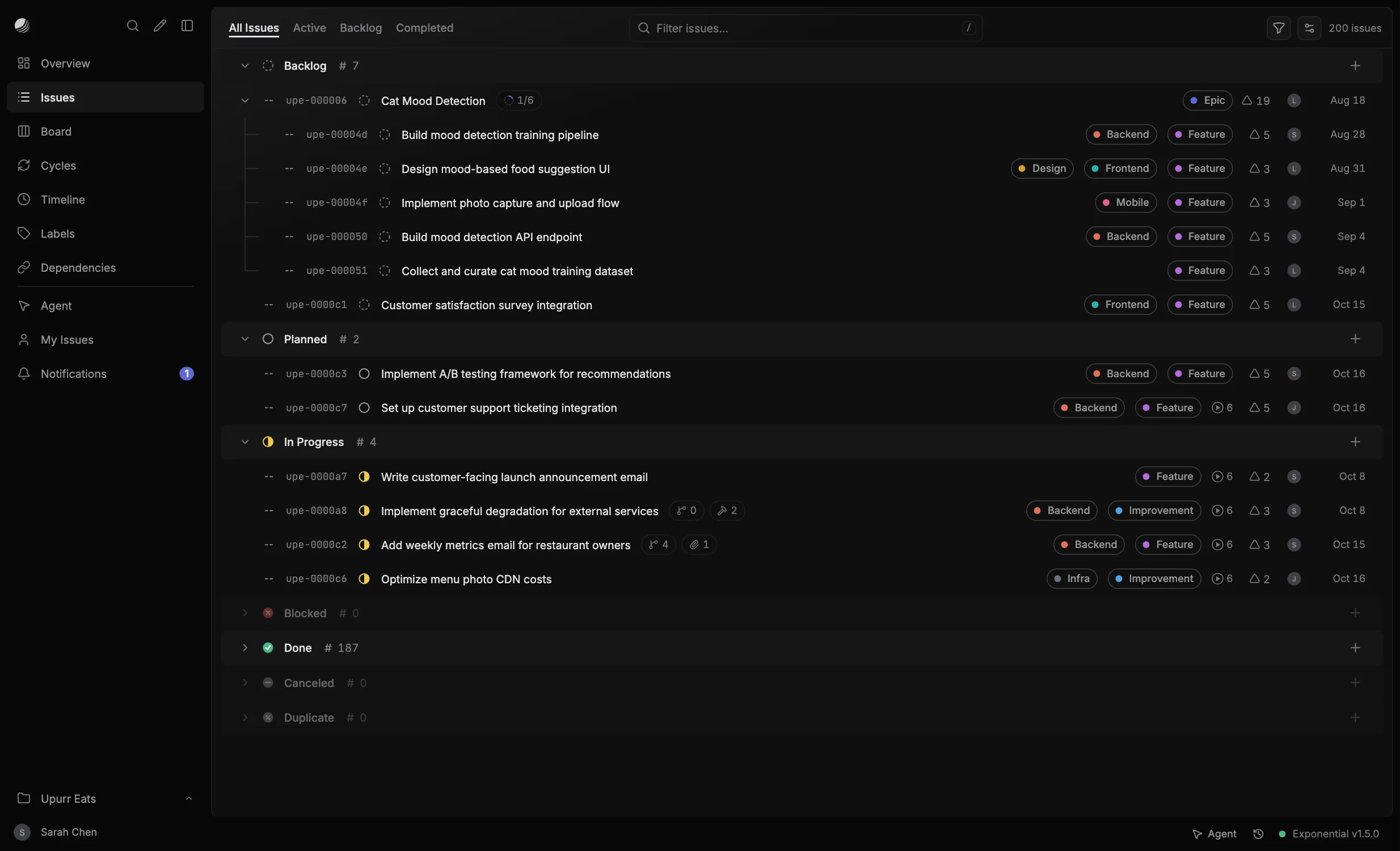
Talk it through. Sign off the spec. Ship it.
Discuss your idea with Claude Code or Codex right on the board. Your agent draws on the code and past design decisions to turn the conversation into a spec with testable acceptance criteria. Once you’re happy with it, the agent builds to that spec in its own worktree.
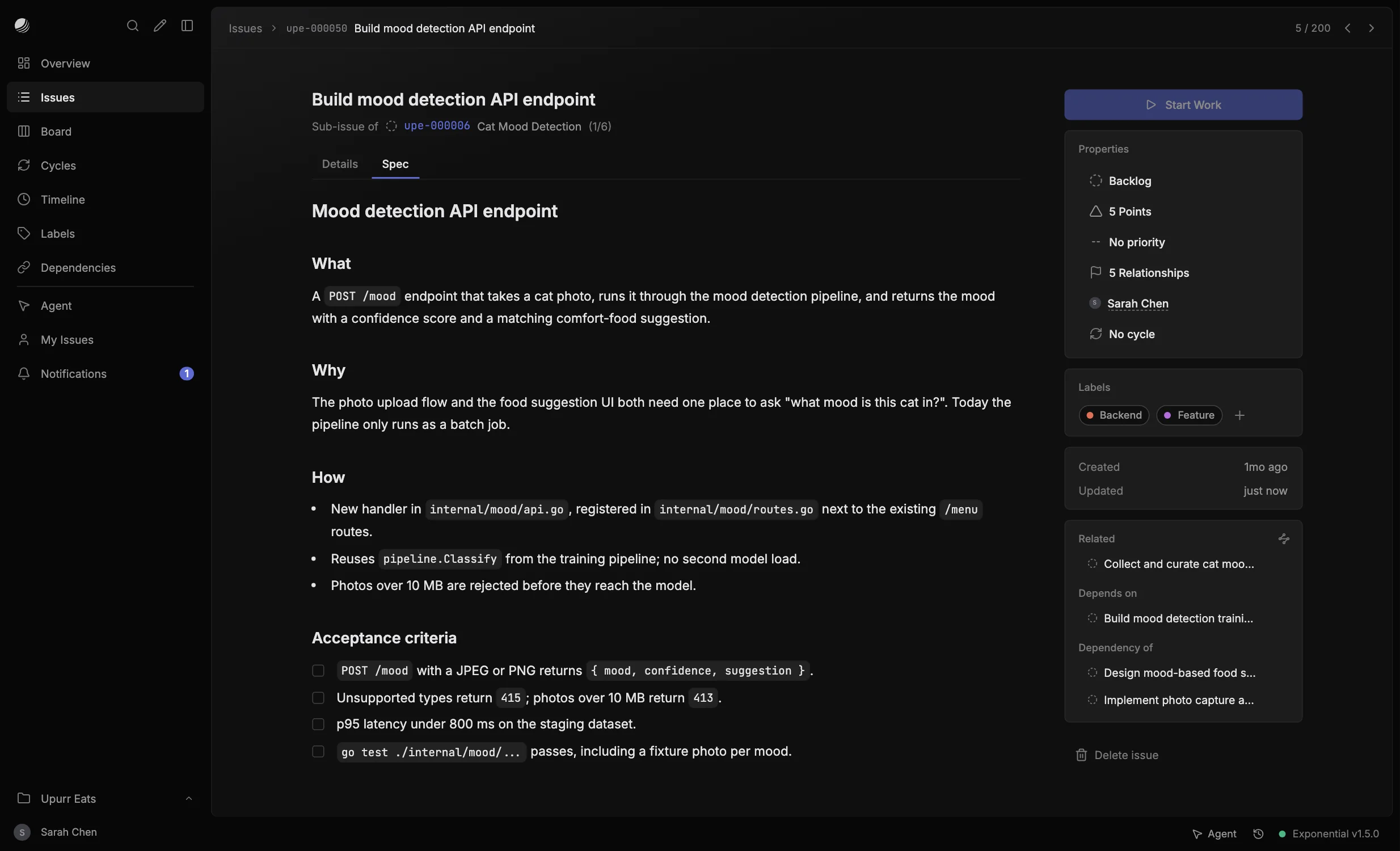
- POST /mood returns mood, confidence, suggestion
- 415 for unsupported types, 413 over 10 MB
- p95 under 800 ms on staging
The why, the what and the how in one place.
The spec says why, the diff shows what, the walkthrough explains how. Review the change with its reasoning close at hand. That context stays in git with your code, so future agents can understand past decisions and build on them.
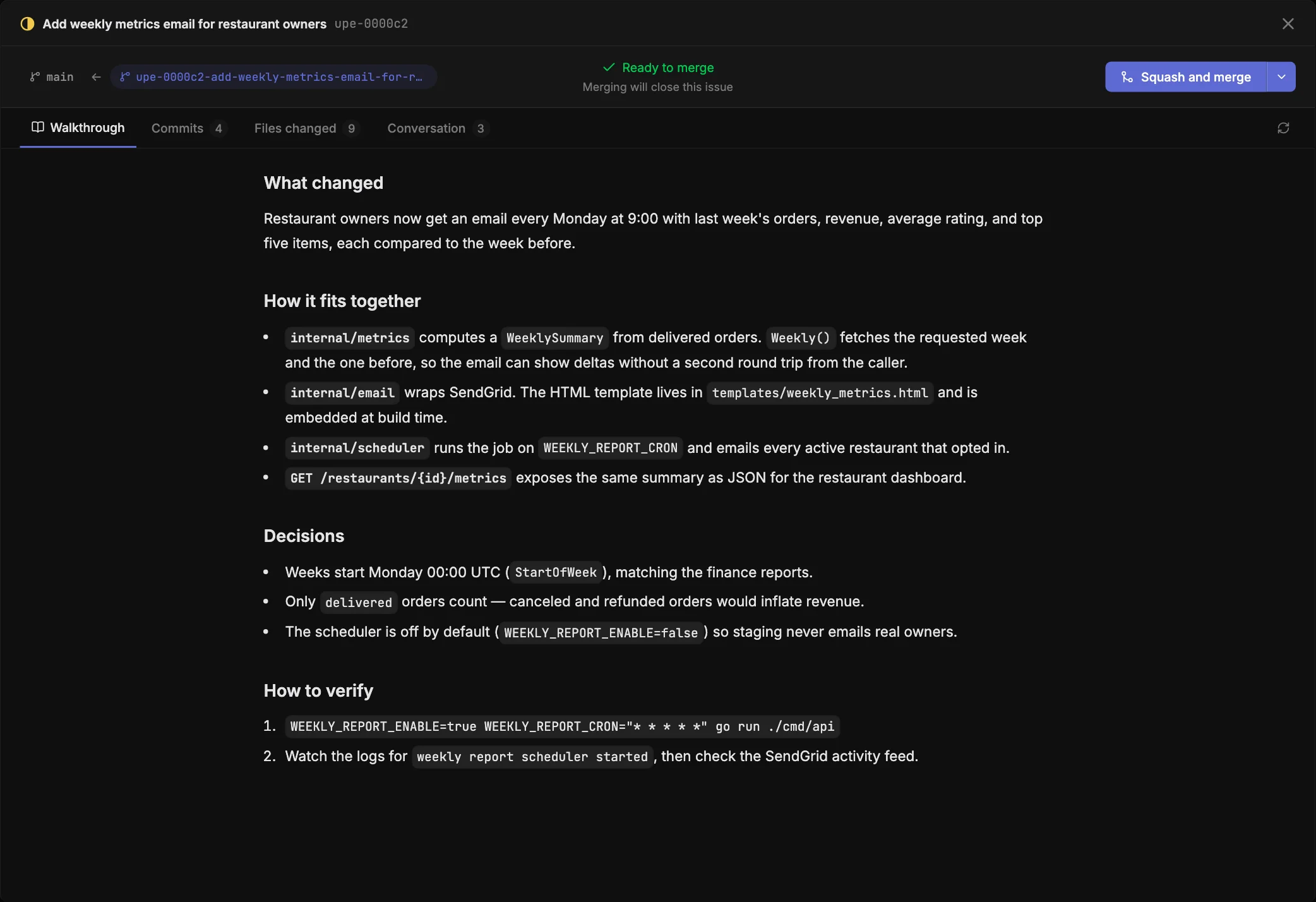
- Owners get a Monday 9:00 email with last week's numbers
- Each figure is compared to the week before
- Only delivered orders count toward revenue
- Off by default, so staging never emails real owners
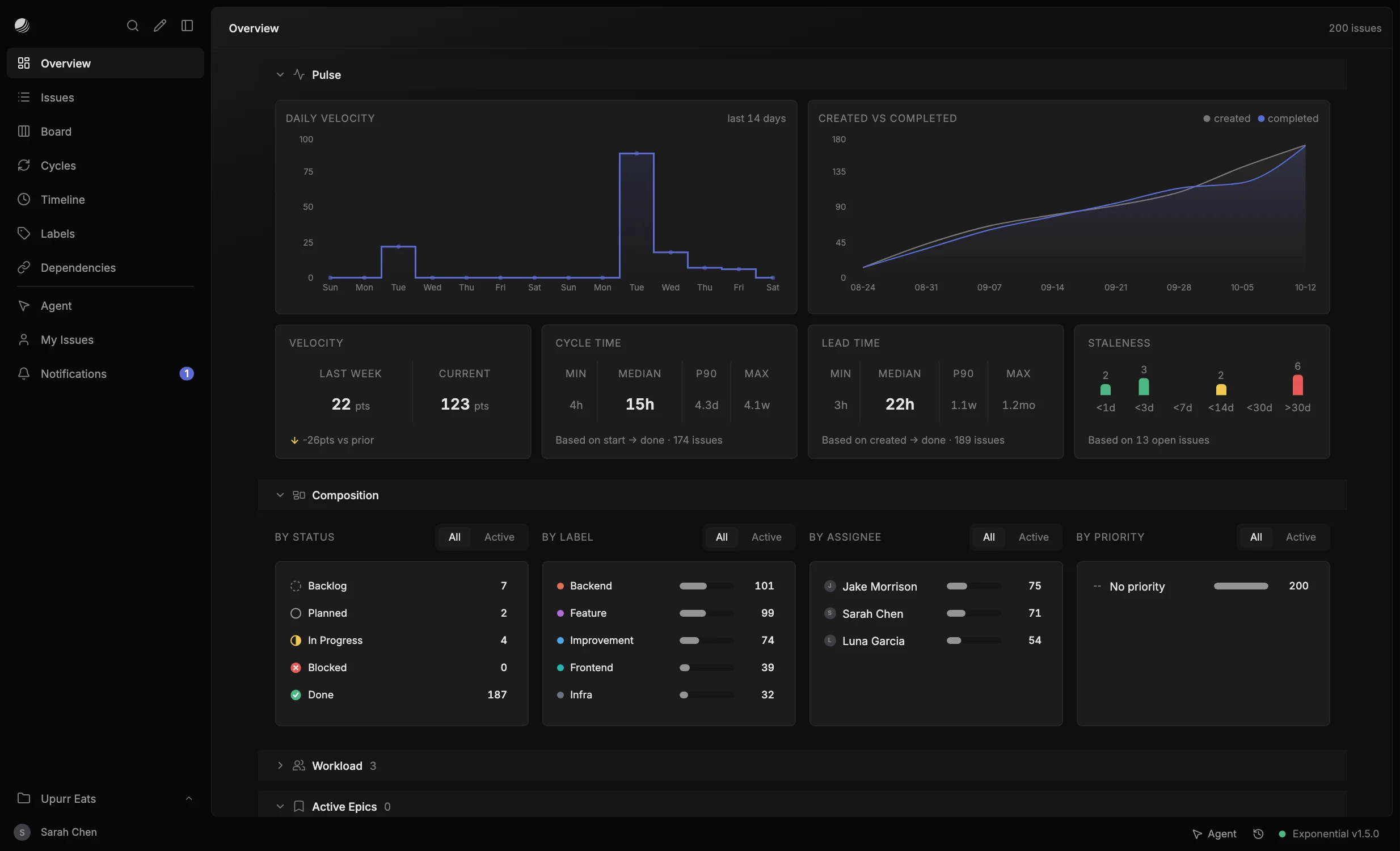
Know what shipped, what's stuck, and what needs you.
Velocity, cycle time and staleness from your own history, plus an inbox for the calls only you can make. See where things stand without chasing updates.
No lock-in. No SaaS. No compromise.
The agent you trust, supercharged.
Bring your Claude Code or Codex. Exponential gives it native access to your stories, specs, and design rationale, with an engineering workflow built for human–agent collaboration. Your agent can understand why the code looks the way it does before deciding what comes next.
Your engineering history, forever.
Backlog, specs, walkthroughs — the what, why, and how live in git alongside your code. Keep the understanding as your software grows. The board runs locally, with no Exponential account required. Your agent uses your own login and model settings.
Start in the repo you already have.
You bring the idea. Your agents build it.
Open source. Local-first. Git-native.
Bring your own agents.